

Perennial Definition: A perennial plant will recur each year in the garden. Alternately, an annual plant is one and done for the season. A perennial’s foliage dies back to the ground each winter while the roots survive. The foliage remerges in the spring. A perennial typically takes 3 years to fully establish (sleep, creep, leap).
Perennial Planting Considerations: Right Plant, Right Place
- Light: Sun (6+ hours of sun), part sun (4-6 hours of sun), shade (less than 4 hours of sun)
- Water: Type of irrigation available (overhead sprinklers, drip system, hand water) and water usage vs. what plant needs
- Slope: Top of slope vs. bottom of slope
- Wind: Protected vs. non protected
- Soil: Clay, sand, richly amended
- Temperature: Cold hardiness and heat tolerance
- Other considerations: wildlife (deer, rabbits, etc), insect and disease resistance (Japanese beetle, powdery mildew, etc), staking, need for division, invasiveness
Perennial Planting Considerations: Design
 A well-designed perennial garden can provide many years of beauty and enjoyment. Careful selection of plant materials and thoughtful planning can result in a full season of color.
- Space: How much room (height and width) is available vs. how big the plant grows (read plant tags!)
- Bloom time: Early, Mid, Late Season (read plant tags!)
- Anchor plants: Trees, shrubs
- Other design elements: Garden art, pottery, benches, fencing, etc.
- Goals: color, textures, aesthetics (native, English, etc), Specific Plants (ie roses), pollinators, fairy garden, privacy, etc.
Plant your Perennials
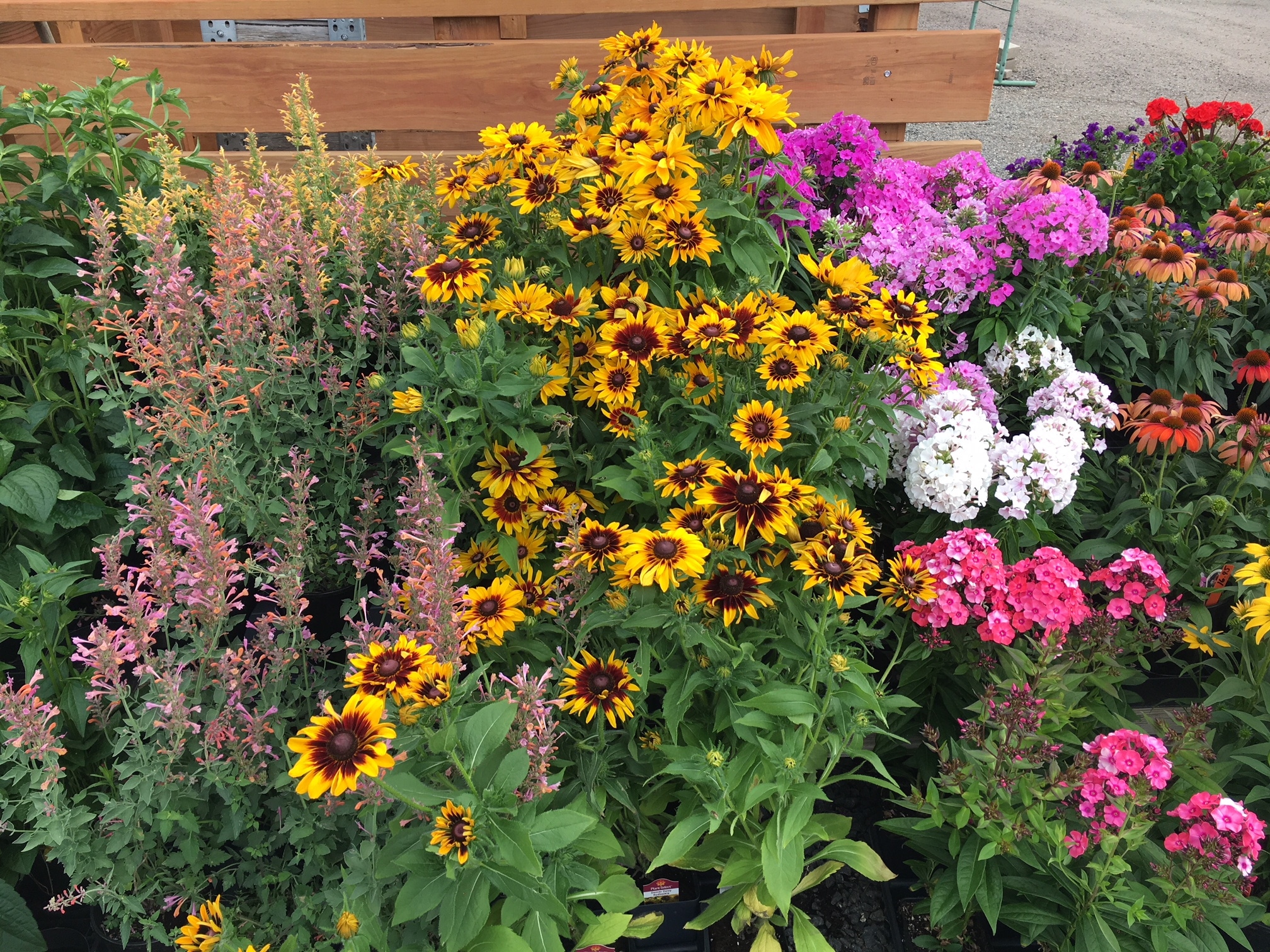 April and May are terrific months for planting perennials! Cool nights and bright days offer the newly transplanted plants time to relax and get situated in new locale. Alternately, fall planting is beneficial for warm soils and cool nights. Summer planting is also possible, just be extra vigilant in watering.
- Amend the soil if necessary (depends on plant and soil type)
- Space the plant as needed (read plant tags!)
- Dig a hole as deep and twice as wide as plant container
- May be beneficial to use a root stimulating product
- If plant is root bound in container, gently tease the roots apart to encourage outward growth.
- Place the plant at the soil level, firm the soil keeping it flush with ground level.
- Water thoroughly immediately following planting. Keep new plants moist, watering every 2-4 days for approximately 2 to 3 weeks. Do not rely on drip system watering for establishing new plants. Even xeric plants need regular watering the first season of growth.
- Mulching new plants may be beneficial to deter evaporation and help keep soil cool, but don’t apply too thickly or up against plant base.
- Do not forget your plant! Go check on the plant every couple of days to ensure its transplanting well.
Maintain your Perennials
 Consider how much maintenance you’re able and willing to dedicate to your perennials.
- Weeding: Do it early and often. Mulch vs. Fabric vs. Bare Ground
- Fertilizing: May not be necessary based on plant and soil conditions
- Soil Amending: May include composting, may not be necessary for native and/or xeric plants
- Dead heading: May encourage additional blooms, may prefer for aesthetic purposes, may deter seeding
- Cleanup: Fall vs Spring. Updated maintenance practices say to wait until early spring to protect the plant crowns and provide winter pollinator and wildlife habitat. Remove any diseased material (ie powdery mildew) as soon as noticed.
- Dividing: Overcrowded perennials may bloom poorly. Divide plants when they are not blooming – Spring and summer blooming plants can be divided in the fall; late summer and fall blooming plants can be divided in the spring before new growth begins.
- Winter Watering: May be necessary especially for newly planted perennials (3 years or younger).
Plant lists are available at Creek Side Gardens for Coloradoscaping (Xeric), pollinators, shade, sun and wildlife resistance among other things. Additional perennials information may also always be found on the Creek Side Gardens website plantsbycreekside.com. Ask any Creek Side Green Team member for assistance in selecting the right plant for you!
