
Learn About Your Hardiness Zone
Outdoor plants are rated by hardiness zone. Choose your outdoor garden plants based on what hardiness zone is appropriate for our zone – Zone 5. A warm zone plant like 7 8 will not survive the winter in a cooler zone like zone 4.
Learn the Crucial Vocab
Annual/ Perennial – annual plants will die at the end of the season when the frosty temperatures arrive. Perennial plants will survive the winter months and grow again the next year.
Sun/Shade – choosing the best plant for your garden or patio depends upon whether the location is sunny or shady.
Choose the Best Month to Start
Early Season/ Warm Season – early season plants will tolerate or prefer cooler temperatures, perhaps some light frost (below 32 degrees). Warm season plants will not tolerate a frost and suffer injury or death.
Early season for planting may begin around early April to plant perennials, shrubs and trees, early season vegetables like lettuce, peas, carrots etc. or pansies and other early season annuals.
The frost free date for the Colorado front range is right around Mothers Day/ mid-May so warm season planting begins at that time for tomatoes, peppers and warm season veggies and geraniums, petunias and other warm season annual flowers.
Decide Between Raised Beds or In-Ground Gardens
Raised bed pros – minimal bending down, small space, easy care
Raised bed cons – more watering, must construct
In-ground pros – less watering, less time and money
In-ground cons – more weeds, harder to maintain
Optimize Garden Soil
Healthy soil is the foundation of garden success,
Nutrition – make fertilizer plan. Use organic or synthetic sources to be successful.
Structure – add organic matter to improve clay soils lie we have along the front range. Consider Natures Yield Organic Compost.
Select the Right Plants
Herbaceous annuals – most colorful flowers for the summer including favorites like marigolds, impatiens, petunias, zinnias
Herbaceous perennials – plants that return every year because they regrow from the root system in the ground including columbine, shasta daisy, hosta.
Woody trees and shrubs – rather than dying back like herbaceous plants, they sprout new growth from their branches
Vegetables, Herbs & Fruits – generally edible annuals but includes perennials and woody shrubs and trees
Design the Garden
Mature size – low-lying in the foreground, medium size in the middle, tall in the back or center of an all-around garden.
Form – for formal look use geometric plant shapes like squared off hedges and neat edging plants. For informal use irregular forms.
Line – straight lines and hard angles give a formal look, while curved lines offer a casual feeling.
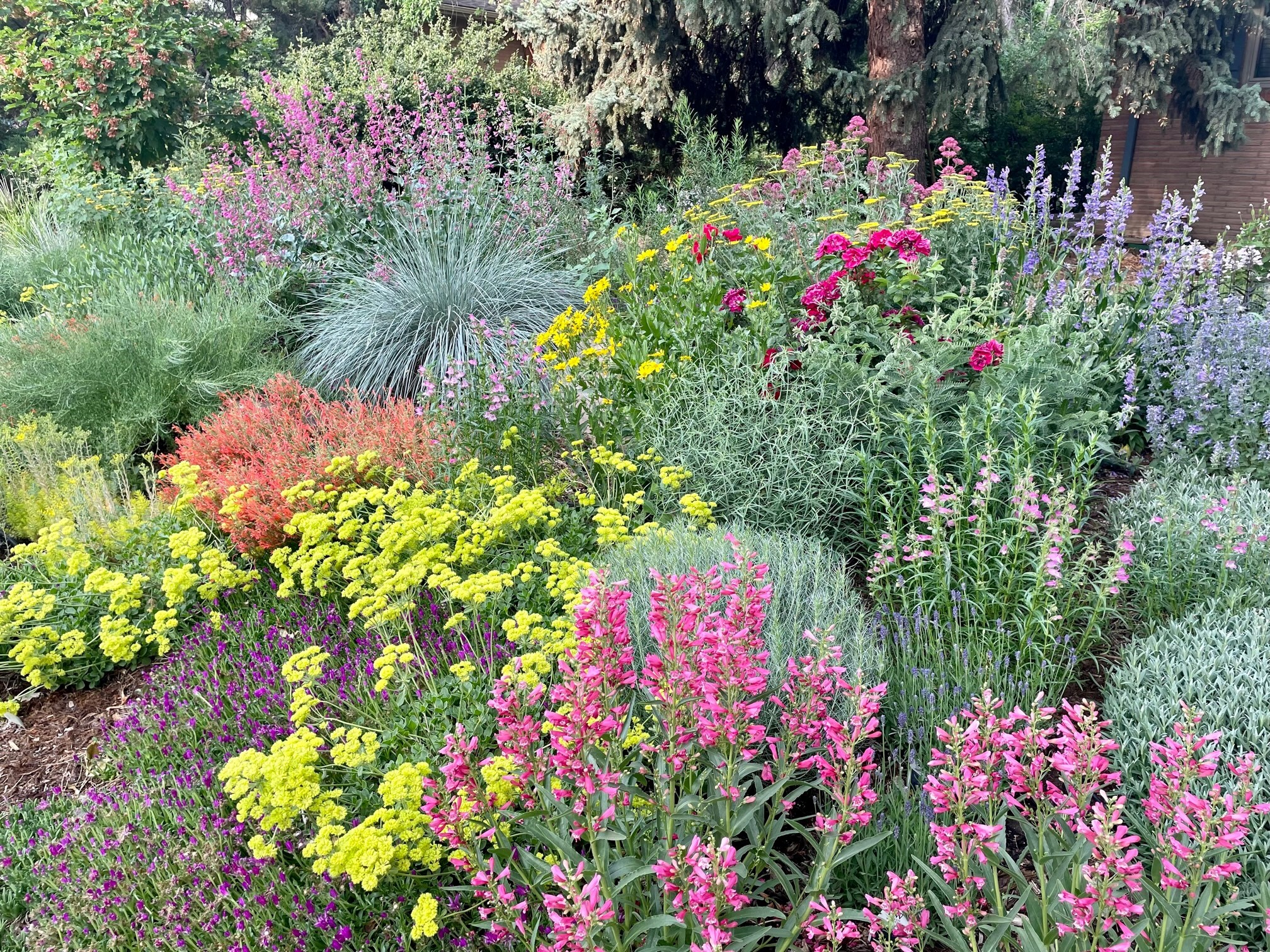
Texture – to create variety and visual interest make sure to use plants with different textures. Fineness or coarseness, roughness or smoothness, heaviness or lightness of a particular plant.
Choose a Color Palette
Understand warm and cool colors. Warm colors include yellow, red, orange. Cool colors include blue, purple, green.
Create unity and contrast. Stay within a color range. Or mix and match complimentary colors.
Use Proper Planting and Transplanting Techniques
Seed packets will contain detailed information for successful planting. Rooted plants require a hole for planting, depth in pot, water in at planting time.
Understand Weeds
Weeds – plants out of place. Begin weeding manually early in the cycle for best control. Then stay on it.
Control Pests
All gardeners face pests at some point. It is important to realize all gardens are naturally diverse and will have some tolerance for pests. Prepare to maintain a balance.
