Plant & Gardening Trends

Mid Summer Garden Tips

Japanese Beetles & Control Japanese beetles are coming!  They can be very damaging to plants, especially roses, grape vines, virginia creeper vines.  Adults feed on leaves, buds and flowers of many common garden and landscape plants.  Feeding on leaves is usually restricted to the softer tissues between the larger leaf veins, which results in a characteristic feeding pattern known and described as ‘skeletonizing’.  More generalized... Read More

Fresh Summer Flowers

Once summer starts, it is not the end of the season at Creek Side Gardens.  It just begins a new chapter.  We are constantly planting and nurturing Grown Fresh flower crops all year long.  As the greenhouses begin to empty out after the busy spring season, we begin to fill them back up again so that you can be assured of finding fresh, beautiful flowers all summer... Read More

Creek Side Pollinator Plant List

Researchers have identified that perennial flowers tend to be far more attractive to bees than annuals. Many different types of perennials are good for bees, from showy flowers to herbs. Herb gardens are an excellent resource for bees because they flower over a long period of time, and herbs grow fairly large and produce lots of flowers. Consider adding pollinator plants in the garden that... Read More

Fun Facts About Honeybees

Honeybees have been in existence for over 30 million years. Honeybees are the only insect that produces food eaten by humans. Honeybees are the only creatures that do not have to kill or maim to live. Eight (8) fl oz of honey takes 570 honeybees, visiting 1,000,000 flowers! Each honeybee produces 1/12 teaspoon of honey in its lifetime It requires eight pounds of nectar to... Read More

Creek Side Plants Galore!

Summer is here and the time is right….to visit the Creek Side Courtyard of Annual flowers, the Perennial Pathway of Perennial flowers, the Woodland Walk featuring shrubs and trees and the Frontyard of Roses!  Beautiful, colorful Grown Fresh flowers and soothing greens all around.  Just imagine what your patio and landscape will look like? Hanging Baskets & Container Gardens Our Annual Hanging Baskets love the warm temperatures... Read More

Cool Season Vegetable Bulbs

Asparagus crowns Asparagus grows best in deep, well-drained sandy loam soil.  Improve Colorado soils with organic matter like compost to increase drainage.  Make a trench 8“deep, in rows 4’ apart.  The asparagus crowns are then laid in the trench 8-12” apart.  Cover the crowns with 2-3” of soil.  Once the asparagus begins to emerge in the furrow, gradually fill in and cover small weeds.  Eventually... Read More

Colorado Garden Soil

A little understanding of our weather conditions and working in our drier, sometimes limiting soil properties will help you improve your garden soil and make smart plant choices this gardening season. Soil is a fascinating mixture of microscopic to larger forms of life (earthworms are good), plus varying amounts of air, water, decomposing living matter, aka organic matter, and different-sized soil texture particles or pores... Read More

Garden Clean Up Tips
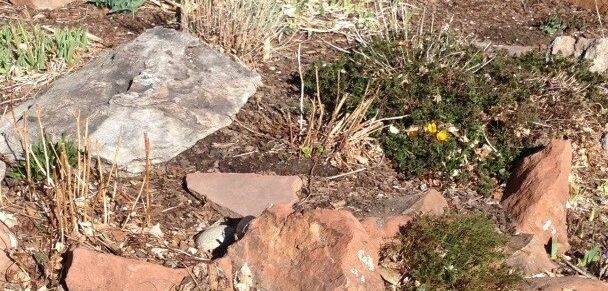
Garden & Landscape Clean Up Hints and Tips Lawns Hand rake lawns to remove debris and encourage air movement in roots (usually no need to power de-thatch) Top dress with uneven spots with top soil and/or peat moss. Reseed bare spots. Aerate lawn with a minimum of 2” plugs (not too dry). Leave plugs on top of lawn. Apply pre-emergent herbicide to control crabgrass, dandelions,... Read More
Herb Gardening

Herbs have long been revered for both their medicinal and culinary value. They may cure colds, help you sleep and add flavor and zest to dinner. Fortunately for home gardeners, herb gardening is relatively easy. They thrive in just about any type of soil, do not require much fertilizer, and are not often bothered by insect or disease pests. Defined as a plant without a... Read More

Microgreens and Sprouts

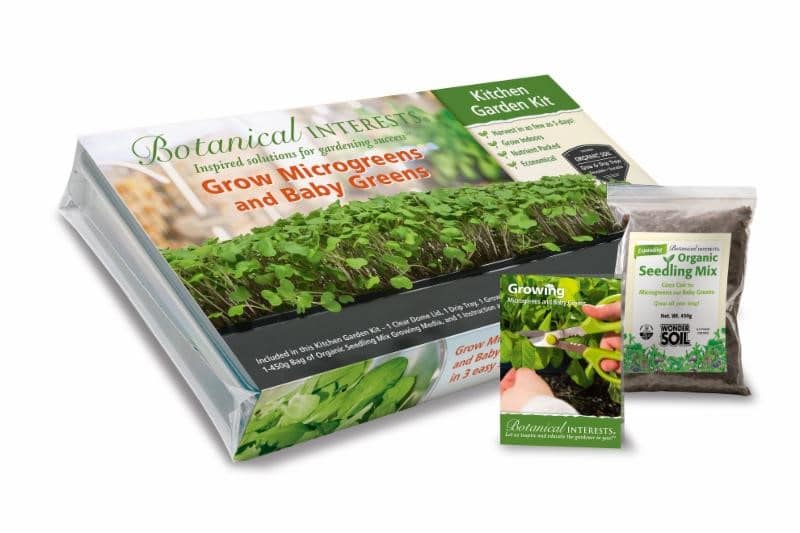
Microgreens and sprouts are trending everywhere from cooking shows and magazines to fancy restaurants and food trucks. But here’s the secret—you can grow microgreens and sprouts right in your kitchen for pennies! Microgreens are young, leafy vegetables or herbs that are harvested just above the soil line when the plant is 1–2 inches tall. Microgreens include the first pair of leaves, called cotyledons, and the... Read More